
Hard Slick
White sidewall
The hard slick is built for durability on hot or abrasive circuits, letting drivers run long stints with fewer pit stops.
Formula 1 tires use different compounds, which are rubber mixes that can be softer or harder. Softer tires give more grip and speed but wear out faster, while harder tires last longer and trade some grip for durability.
Teams choose compounds based on track layout, surface, and weather, trying to balance pure lap time with how long each set will survive.

Sidewall colors help fans and teams see tire choices at a glance during a race.
For 2025, Pirelli supplies six dry‑weather slick compounds, from C0 as the hardest to C6 as the softest. For each Grand Prix, only three of these are selected and labeled Hard, Medium, and Soft for that weekend
Harder tires are designed for abrasive tracks and long stints, while the softer end of the range gives maximum grip on smoother circuits or in qualifying runs
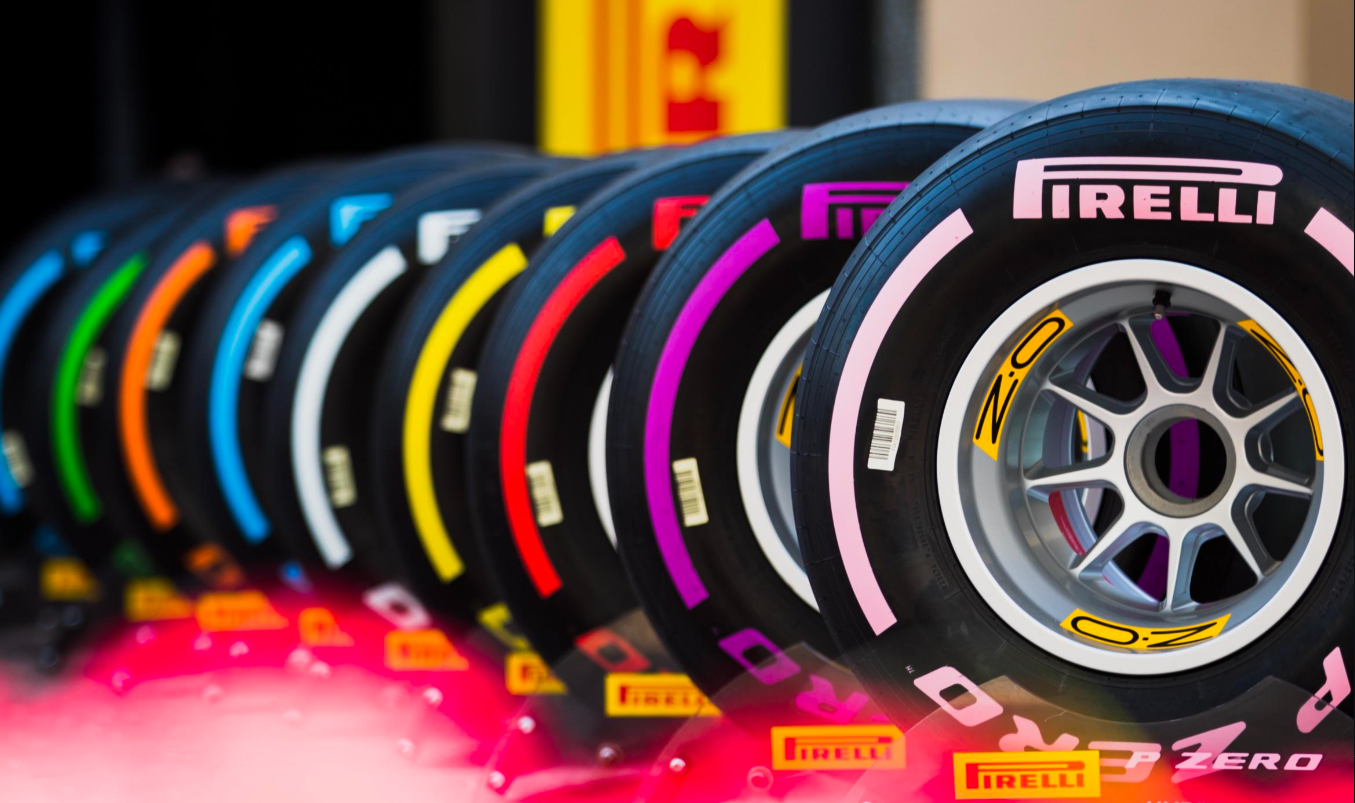
Each compound offers a different mix of grip and durability, letting Pirelli tune race weekends to each circuit.
The hard slick is built for durability on hot or abrasive circuits, letting drivers run long stints with fewer pit stops.

The medium slick is a balanced choice that combines good grip with solid durability and is often the main race tire.

The soft slick offers the most grip and best lap times in dry conditions, but it overheats and wears out faster over long runs.

Intermediate tires are used on damp or lightly wet tracks, with grooves that clear some water while still giving good contact with the surface.

Full wet tires are designed for heavy rain, with deep grooves that push water away to reduce aquaplaning on flooded sections of the track.
Softer compounds give more grip and better acceleration, which leads to faster lap times, but they wear quickly and require more pit stops.
Harder compounds handle high wear and long stints, which is vital on rough or high‑speed circuits where tire loads are extreme.
Intermediate and wet tires keep drivers in control when the track is damp or flooded; using slicks in those conditions is unsafe and much slower.
Teams design race strategies around compound choices and pit windows, using different mixes of hard, medium, and soft sets to gain time over rivals.